paste works again
1 Like
Because of a mistake made by Dolby Laboratories.
FEL is not legal as it’s only for physical disks. Any FEL media you watch on any media player like AM6 is not legal as it got produced by manipulate the disc copy protection. And this is a license violation, every where on earth.
Dolby vision media is only available in MEL or other profiles for streaming.
2 Likes
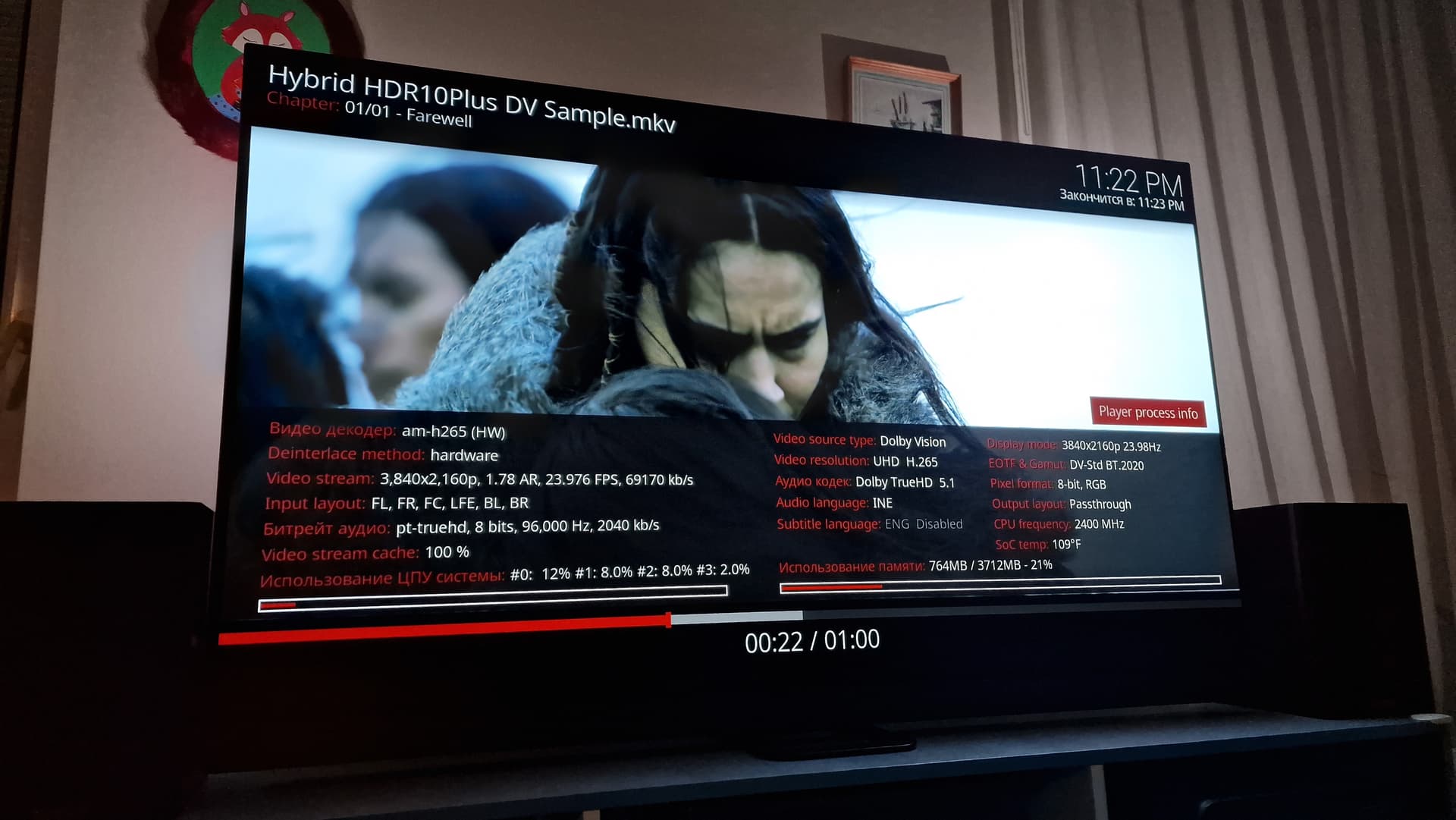
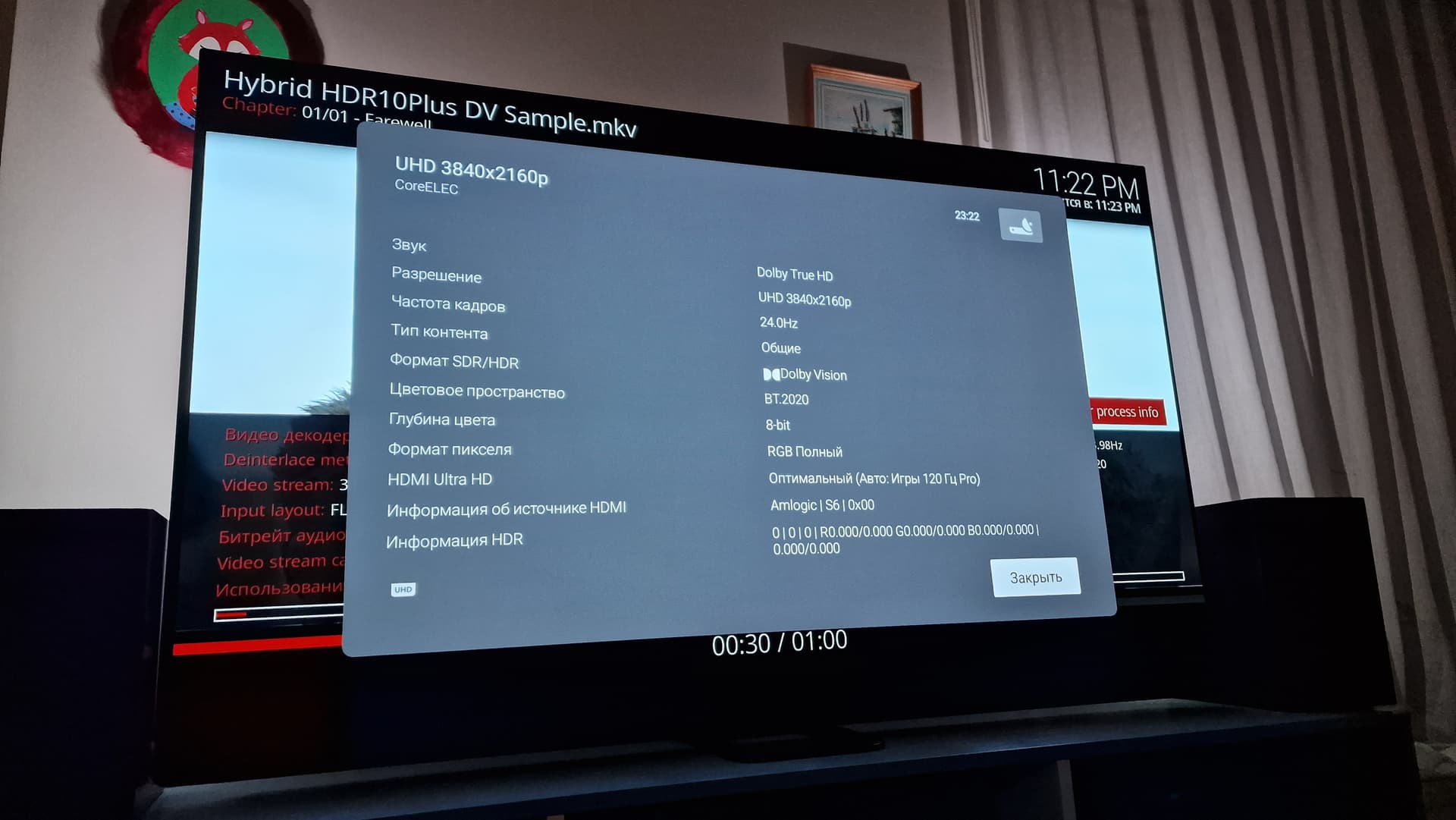
4 Likes
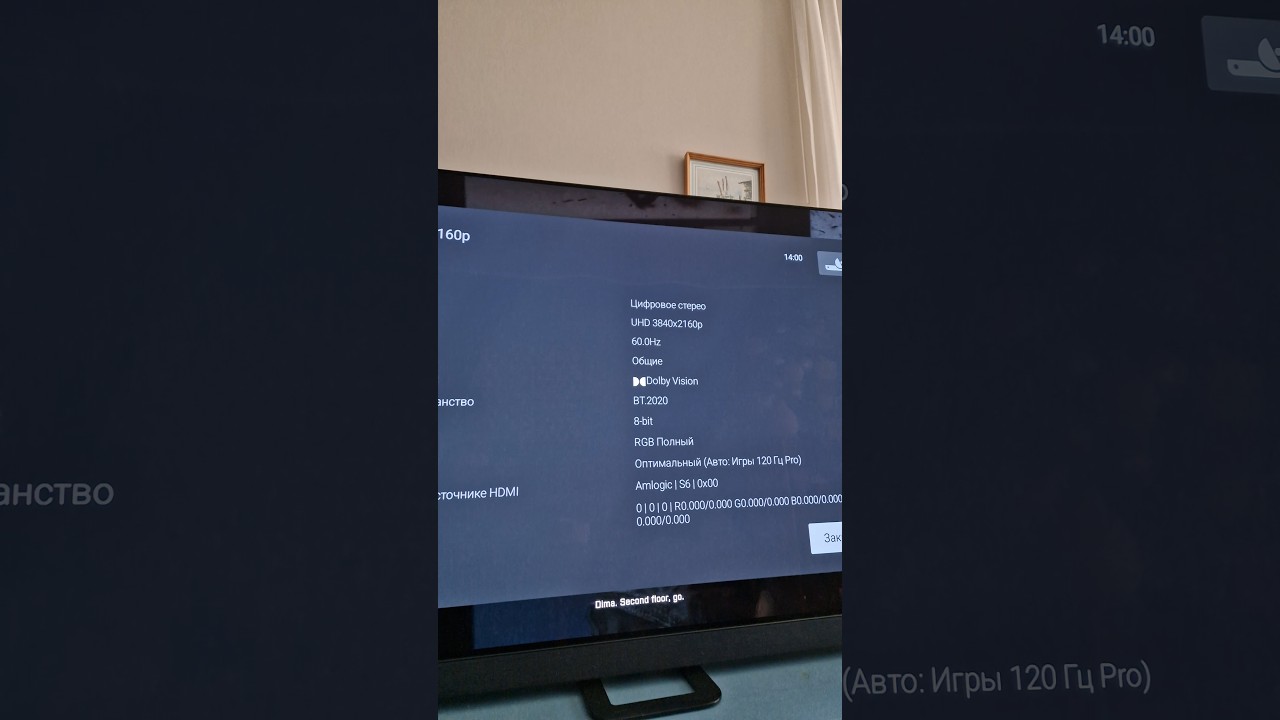
So pretty much Dolby Vision Profile 5,8(60fps),10 work,profile 7 Fel as mentioned before only 1 layer,but anyways it works fine.
2 Likes
I have no clue if auto translate works,but in short words,every audio codec I tested worked,even some crazy DTS ES Discrete and Dolby digital surround EX.
Dolby True HD/Atmos and DTS:X Master audio work without any lipsync issues,skipping video do not trigger any audio dropouts.
I can’t test Auro 3D,but 7.1PCM and some hi-res 192KHz 24bit audio works when AM9 is connected straight to receiver,with EARC my TV won’t passthrough it.
300MBps Jellyfish works,so it is 6X times more than average Blu-ray bitrate you could find.
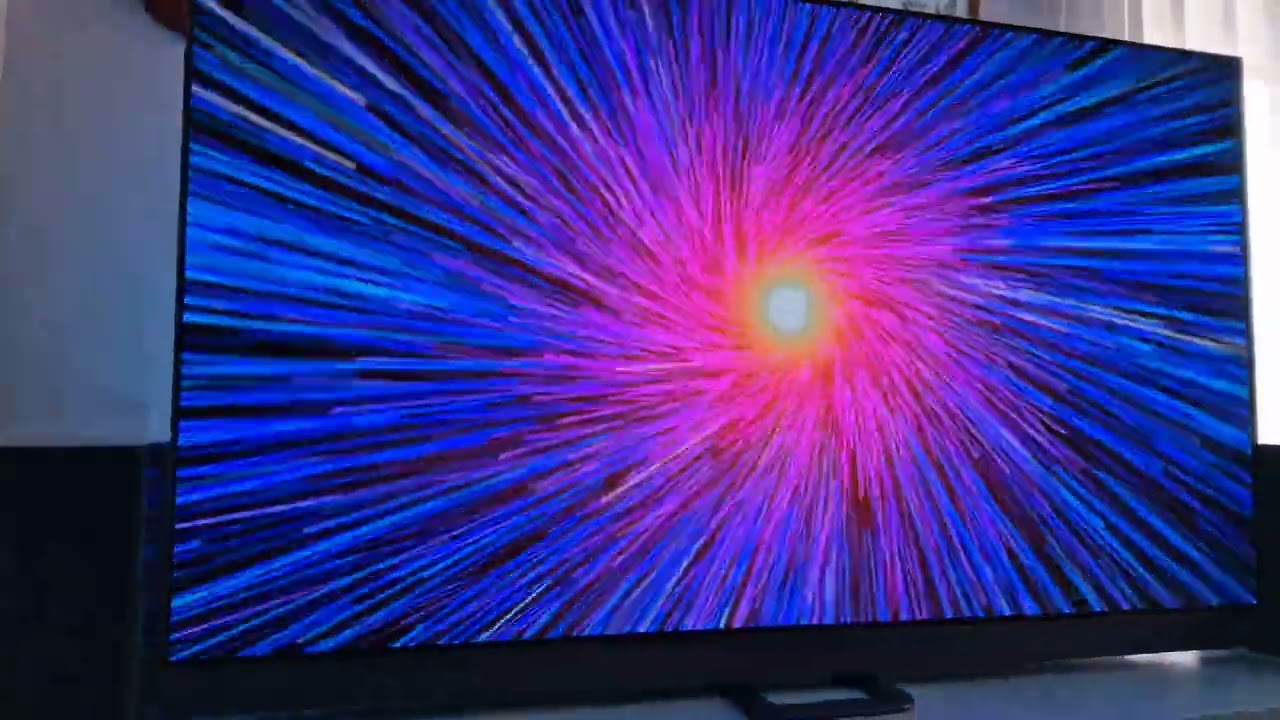
HDR10+ and Dolby vision profiles 5,8,10 work,VVC works but without HDR atleast for now.
I tested for fun some DV profile 20 it didn’t work,8K VP9 video didn’t work.
So yeah,with proper disc drive,we can watch most of the video/audio content available out there without any issues.
Thanks to all CoreElec Devs for all of your hard work.
3 Likes
Hello everyone, after a few months’ absence I’ve been catching up on the latest news here and on Reddit. From what I’ve read, CoreELEC on the Ugoos AM9 Pro (S905X5‑J) seems stable and efficient: audio codecs work well, high‑bitrate files play smoothly, and Dolby Vision profiles 5/8/10 are reportedly supported.
So my question: can we say that the AM9 Pro is currently the best‑performing CoreELEC box for Dolby Vision (aside from the FEL limitations), whether in terms of overall performance, interface responsiveness, or multimedia playback? Or are there still areas where the VIM4, AM6B+ or other devices have a clear advantage I might have missed?
Also, I couldn’t find a current table listing all supported boxes and their compatibility levels ; does anyone have a link? 
Thanks in advance for your insights, and many thanks to the devs for still supporting this awesome project after so many years!
1 Like
The s928x still fastest in single core tasks, the A311D2 is still fastest in multicore tasks. The s905x5 A510 cores are still a little slower than the s922x A73 cores. These scores are bias against the AM6+ because it’s using a 32bit OS. The same device running a 64bit OS will be 5-10% faster.
There are probably some architectural improvements with the s905x5 that give it a boost in overall snappiness compared to the s922x, but I wouldn’t buy an s905x5 expecting a large improvement.
The s905x5 is another incremental improvement over the previous mid-tier SOCs. IMO s905x5 is really only the current AML flagship SOC because they decided to not release a high-end SOC for this generation.
1 Like
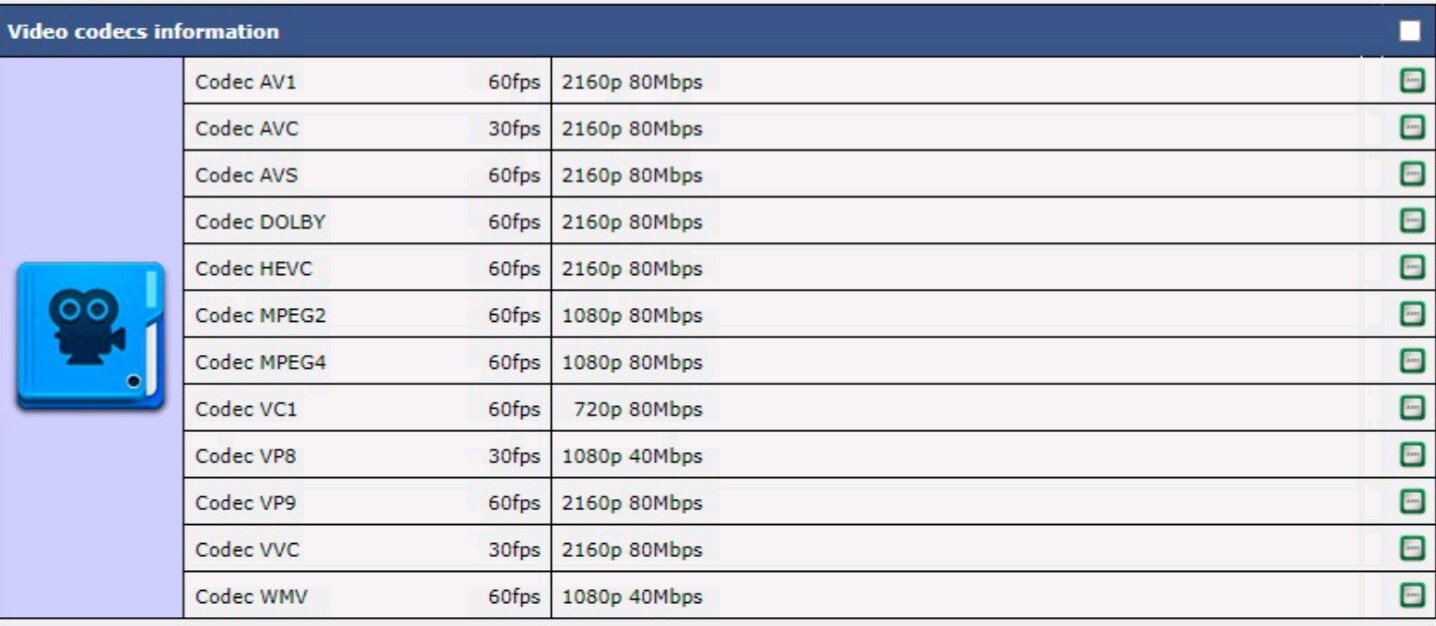
Well,AM9 has most hardware decoders for smooth video playback,on some boxes AV1 decoder is software based,struggling with 4K playback and on majority of them playing VVC is just not possible.
The Dolby Vision TV LED mode (full 8 bit rgb),is just amazing,banding and posterization on my Philips oled908 just doesn’t exist anymore.Now I am completely satisfied with image quality and the way AM9 handles all this media.
2 Likes
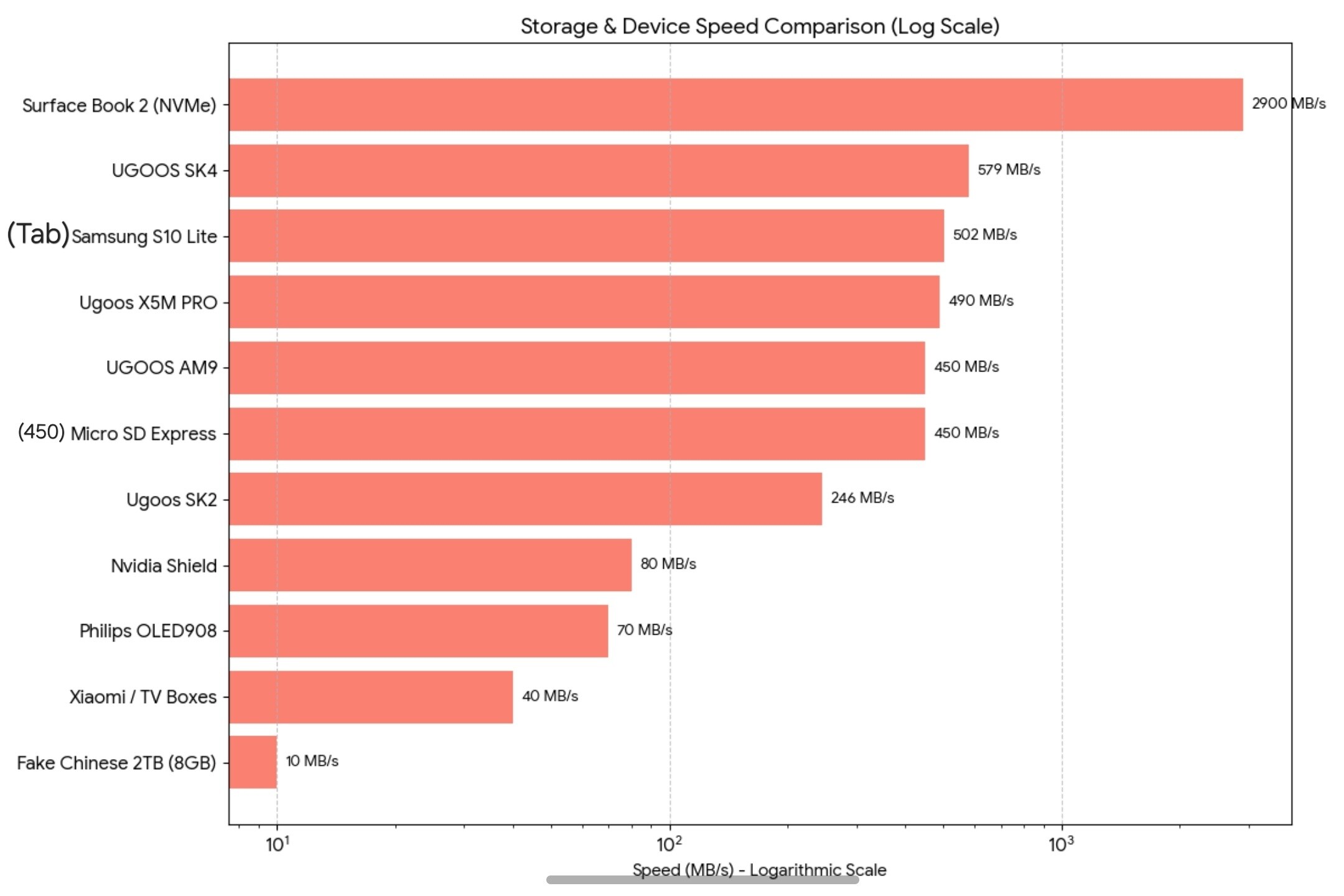
Most of the stuff depends how quickly it loads also on internal storage,you wouldn’t expect Windows to boot fast from old hard drive.
Believe me or not,this is some disc recording speed comparesment chart from different devices,from different manufacturers and categories.Read speeds should be somewhere around x2.5 of write speeds.
2 Likes
I own a VIM4, and while its responsiveness and user interface suit me perfectly, I wouldn’t want a slower device; ideally, I’d like equivalent or even superior overall performance.
My main motivation is to find a CoreELEC-compatible device with Dolby Vision support (even if I have to cross FEL), capable of running CoreELEC 22.0-Piers_alpha2 smoothly and offering at least the same responsiveness as the VIM4 for navigating Kodi (with a 4K GUI). So, in your opinion, what would be the best candidate? (Assuming one exists…) It’s indeed a shame that there isn’t a high-end version of the s905x5.
Have a great day!
Thanks for your feedback and the valuable data, Unlikeall3!
Regarding read/write speeds, my library lives externally on a NAS, but internal storage responsiveness (eMMC) still matters for some of my experimental uses. According to specs and tests, the AM9 Pro’s storage and UI performance seem quite close to what I’ve experienced on the VIM4. As for format compatibility, the AM9 now supports certain Dolby Vision profiles under CoreELEC, which definitely surpasses the VIM4 in that area.
The only concrete piece of data I’m missing to make my decision is the GUI framerate (min–max) under Kodi 4K ; to compare how snappy the UI feels compared to the VIM4.
On paper, it seems quite similar?
1 Like
The AM9 has this thing called ,Performance mode" not only CPU clock speed gets locked at 2400mhz,but whole system acts differently,for example,the Wi-Fi gets speed boost.By default CoreElec is set to performance mode.
There is certantly lack of data available for other TV boxes and devices,they are rarely get tested and it is so hard to find technical data for comparesment.
There could be only one person on earth,who cares how much ,BogoMIPS" TV box has (AM9 has 48) but this data is just not possible to find,on some devices I was unable to find real world performance and benchmarks,just no info available.
I’ve tested AM9 PRO every way possible,benchmarks,hardware tests,emulation,remote desktop,CoreElec performance and so on.
I hope that auto translate works on YouTube,if you’re interested you can check my 2 hour review:

The interface is snappy without any doubts.At my place AM9 Pro works everyday for 6-8 hours,temperature never got above 56c,avarage temperature is 38-42.
I am very satisfied the way it performs.

2 Likes
Thanks again for all this information. You’ve convinced me; I’m going to try this device. However, is it possible to install CE on the internal memory, or is a microSD card absolutely necessary? One last question: were you able to find this device for under €170?
hello there, are there any scripts for the front led to turn off?
and are there plan to implement a switch for dimming or controlling the led in the hardware segment?
thanks in advance
I got mine on a SD card,I haven’t tried installing it to internal memory.
Santa Clause gift  , if you can buy it under 200€ it would be great.
1 Like
No plan to do something more.
You can do it manually from userspace in /storage/.config/autostart.sh file.
First number is brightnesss, then RGB values in hex.
ugoos am9:~ # cat /sys/devices/platform/led/colors/active
active color is 1 00 30 00

ugoos am9:~ # echo "2 10 30 00" >/sys/devices/platform/led/colors/active

ugoos am9:~ # dmesg | grep color
[  508.058502] sk9822-spi led: active color stored as 2 10 30 00

ugoos am9:~ # cat /sys/devices/platform/led/colors/active
active color is 2 10 30 00
2 Likes
thank you, i’ll try

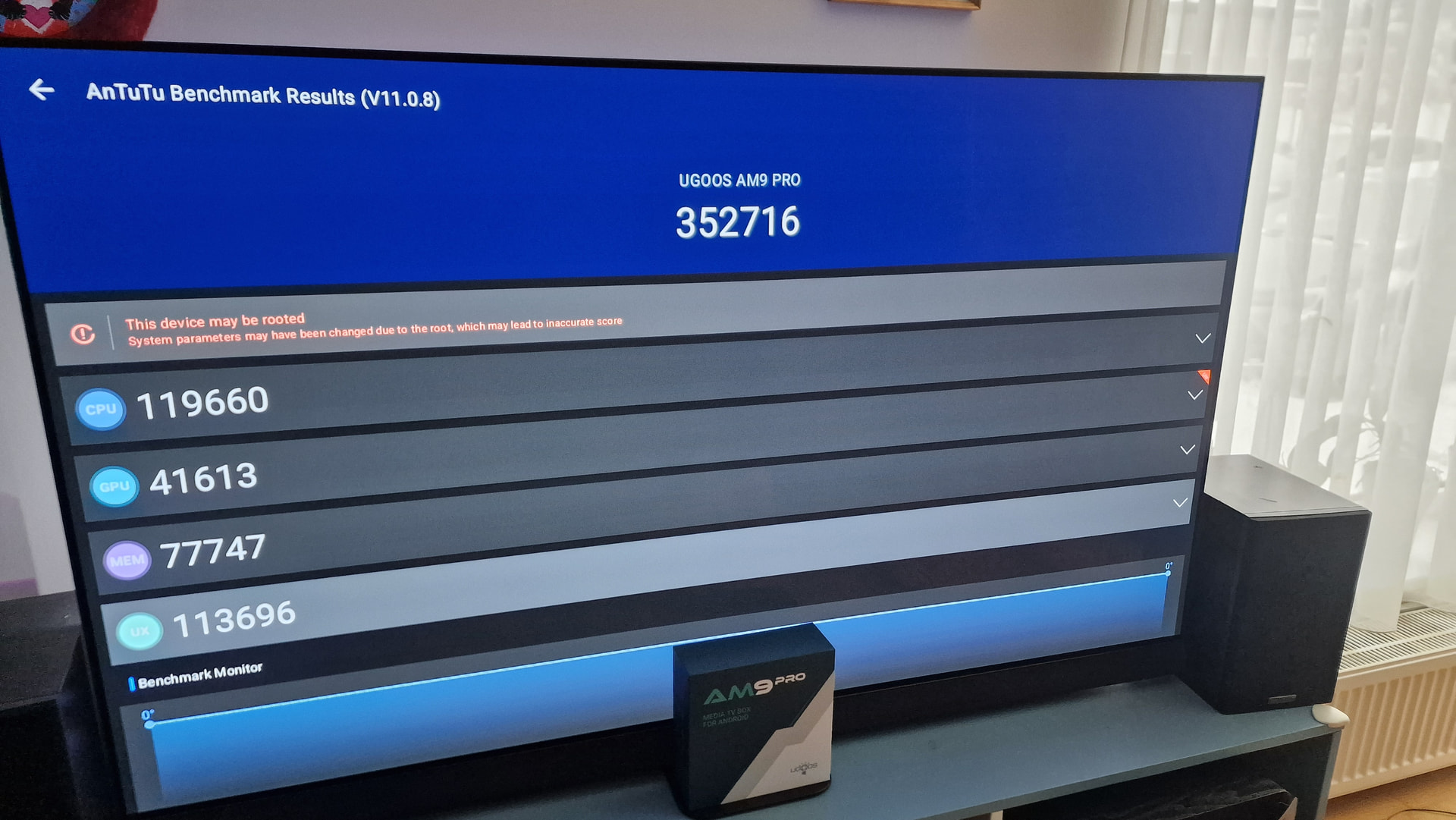
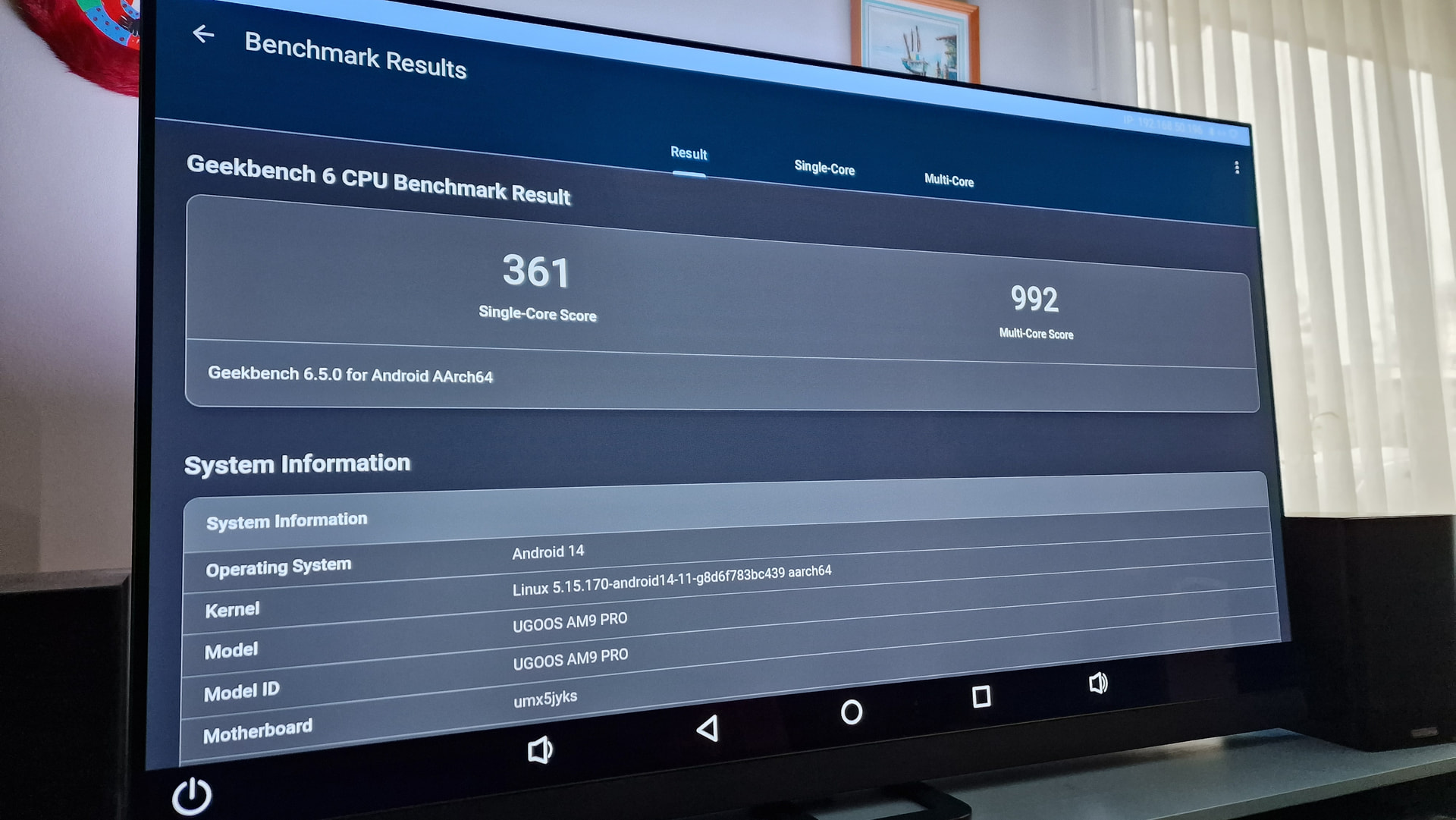
Does the AM9 Pro has any problem of tearing while on the Kodi GUI like S905X5M systems seem to suffer from?
1 Like
I doubt 8.00Gbps is a real measurement. Getting a clean 8.00Gbps from two different devices seems like a dead giveaway that this is not a benchmarking result, and instead a hardware reported value. I don’t know what app this is, but I’d recommend you run an actual RAM benchmark if that’s what you want to know about.
It seems quite possible that DDR5 adds no benefits because of other bottlenecks in the SOC or board.
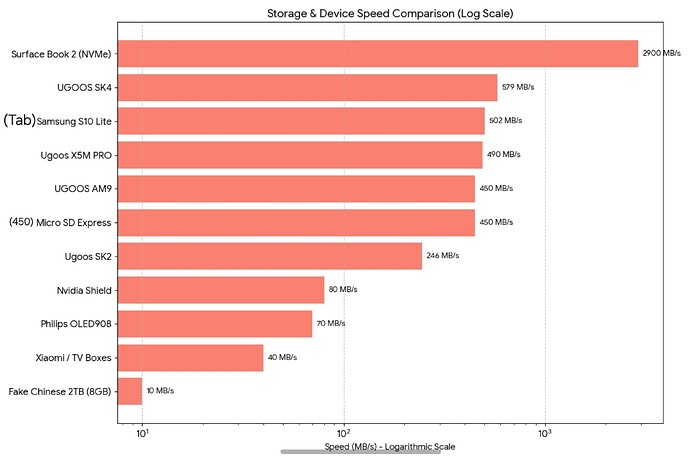
I also don’t understand how these results were obtained. As far as I’m aware, all these Amlogic devices use an SDIO mmc controller limited to HS200/HS400, so that the theoretical max read/write speed is 400MB/s. With real world results being much closer to ~200MB/s.